Australian electrical — design, install, certify
Draw the job once.
Build it. Prove it.
SiteTwin is a digital twin of your electrical installation. Every board, circuit, cable and outlet exists as a real object — designed in the office, verified on site by the sparky doing the work, and exported as a signed certificate the day you finish. Built in Australia, to AS/NZS 3000, for Australian electrical contractors.
 DESIGNED BY A LICENSED ELECTRICIAN
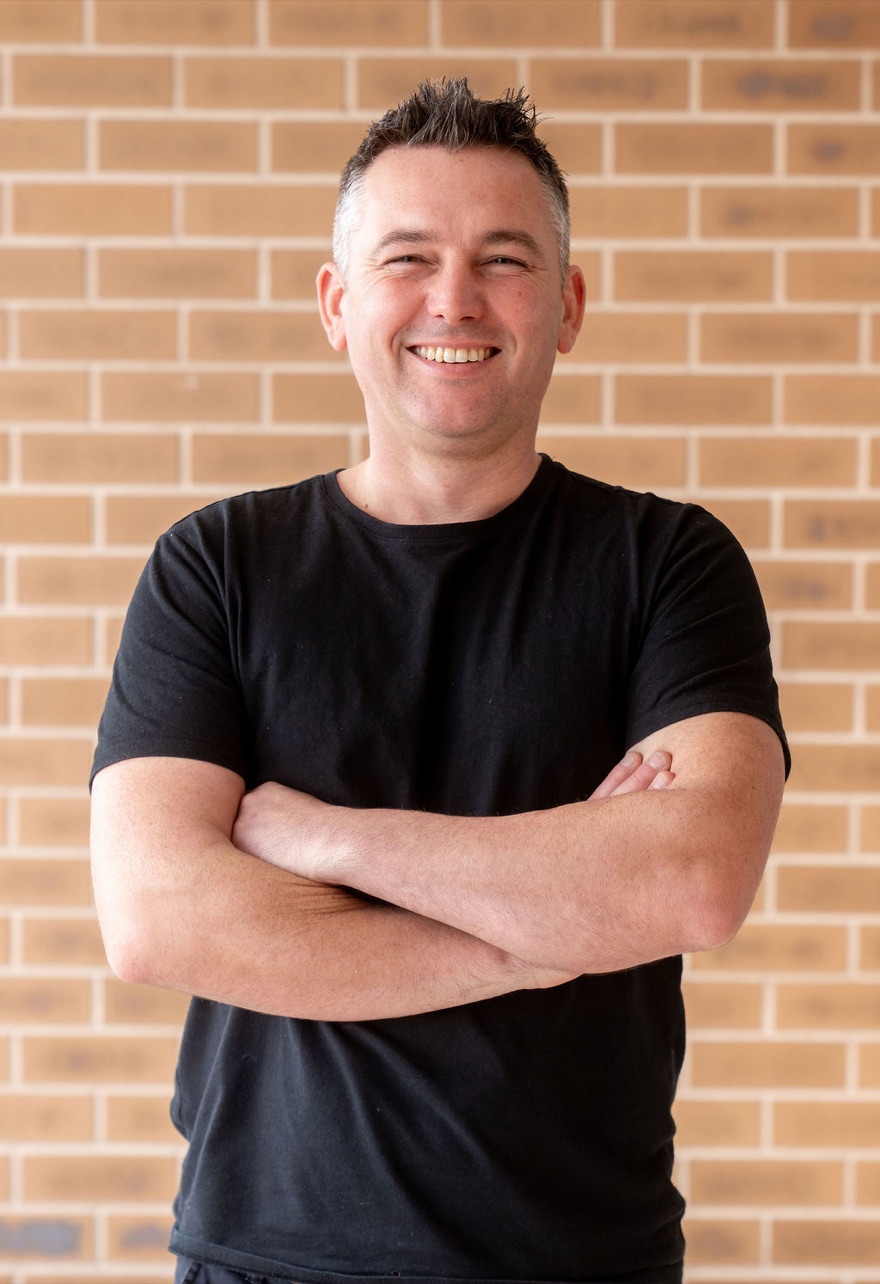
Aidan Green — licensed electrician & licensed builder, NSW
The same job,
typed in five times
01 — Layers & objects
Not lines on a drawing. Objects that know what they are.
A CAD line is dumb — it can't tell you its cable size, who installed it, or whether it passed an insulation resistance test. In SiteTwin every element is a typed object carrying its own specification, its own status and its own history.
Because they're objects, they stack into layers you can turn on and off — structure, containment, power, lighting, data, fire — and every layer stays in register with the others. Change a board and the circuits under it know.
02 — Boards & hierarchy
The whole installation, from main switch to final outlet
Boards aren't a spreadsheet tab — they're a tree. The MSB knows its subs, each sub knows its ways, each way knows its circuit, and each circuit knows every object hanging off it.
So the questions that normally take a phone call answer themselves: how many spare ways are left on L3 East, what's actually loaded on this sub, which circuits are still unverified, and what happens to max demand if the tenant adds three more workstations.
03 — Cable schedule
The schedule isn't a document. It's a view of the model.
Cable sizing, volt drop and protection coordination are calculated from the objects themselves — route length from the containment layer, load from the circuit, method from the installation condition. Change a run and the schedule changes with it.
| Circuit | From → To | Cable | Length | Method | V-Drop | Protection | Status |
|---|---|---|---|---|---|---|---|
| C-04/L3/SB2A | MSB → SB2A | 4C 95mm² Cu | 48 m | Tray | 1.2% | 160A MCCB | VERIFIED |
| C-07/L3/GPW | DB-L3-W → W1 | 2.5mm² TPS | 34 m | Conduit | 2.1% | 20A RCBO | AWAITING QA |
| C-11/L3/LTE | DB-L3-E → LTE | 1.5mm² TPS | 72 m | Ceiling void | 5.4% | 16A RCBO | DEFECT ×2 |
| C-14/L3/MECH | DB-MECH → AHU2 | 4C 16mm² Cu | 26 m | Ladder | 0.9% | 63A MCB | NOT STARTED |
C-11/L3/LTE exceeds 3% volt drop at 72 m on 1.5mm². Model suggests 2.5mm², or splitting the run at the east riser. Raised automatically at design stage — not discovered at commissioning.
04 — Plan views
Every drawing is generated, never maintained
Filter the model by layer, by board, by circuit, by installer, by status — and you have a drawing. A rough-in sheet for Tuesday's crew, a defects plan for the QA walk, a services coordination view for the builder, a set of as-builts for handover.
They can't go stale, because there is nothing to update. The drawing is a question you asked the model this morning.
05 — On site — electrician view
Built for one glove off, halfway up a ladder
The site view is not the office view shrunk down. It's a task list for today's circuits, big enough to hit with a gloved thumb, legible in full sun, and it works in a basement with no signal — everything queues and syncs when you walk back out.
Scan the board label, see what's on it, tick off what you fitted, photograph the termination, punch in your test results. That's the whole interaction. No paperwork tonight, because the paperwork happened while you worked.
"I designed this screen at a switchboard, not at a desk. Every field on it is one I got sick of writing on the back of my hand." AIDAN THOMAS GREEN — FOUNDER
IR test 0.6 MΩ — below 1 MΩ minimum. Clause 8.3.5.
06 — Compliance & certification
The certificate writes itself, because you already did the work
Every state calls it something different and wants it in a different format — a CCEW in New South Wales, a COES in Victoria, a Certificate of Compliance in Queensland, an eNotice in Western Australia. All of them are an evening job: dig through photos, ring the apprentice, reconstruct test results from a damp notebook, hope the numbers match the installation.
In SiteTwin, every circuit already carries its test results, its installer, its date, its photos and its clause references — captured at the board when the work happened. The certificate is a render of data you've been collecting all job. Pick your state, press export, sign, send it to the customer and the network operator.
Electrical work — NSW
Electrical first. The rest of the services follow.
The object model is trade-agnostic — a hydraulic riser and a mechanical plant run behave like a circuit. Electrical is where the compliance burden is heaviest, so that's where we started.
Both classes on one licence. Check it yourself on the NSW Fair Trading register.
Why this exists
I hold both licences. I've been on both ends of this argument.
I'm a licensed electrician and a licensed builder. That's an unusual pair of tickets, and it means I've been the sparky handing over a certificate, and the builder chasing one.
Both sides waste the same weeks on the same problem: the installation exists in someone's head, in a marked-up PDF, in a text message, and in a notebook in a ute — and never in one place. So the as-builts get redrawn from memory, the CCEW gets reconstructed on a Sunday night, and when something's questioned two years later nobody can prove what was actually installed.
SiteTwin is the tool I wanted on my own jobs. Not a project management app with an electrical module bolted on — a model of the actual installation, built by someone who has terminated the circuits and signed the certificate.
If a screen in this product annoys you, tell me. I still hold the licence, and I still care what it says.
LICENSED ELECTRICIAN & LICENSED BUILDER
Built here
Australian software for Australian sparkies
SiteTwin was written in Sydney by people who have stood in a riser at 6am with a torch in their teeth. It speaks AS/NZS 3000, not a translated American standard. It knows what a CCEW is, what an RCBO is, and why the volt drop rule matters on a 72 metre lighting run.
Support is in your time zone. Nobody's going to ask you what a "receptacle" is.
Bring your next job in with the paperwork already done
Twenty minutes, your own drawing set, your own boards. We'll build a live twin of one level while you watch — anywhere in Australia.
Contact
Tell me about the job
Send a level, a board schedule, or just the address. I'll come back within one business day with a live twin of part of it — no obligation, no sales deck.
Miranda NSW 2228